Contraindications for Treatment
- Absolute Contraindications (Patients currently taking or recently stopped certain medications):
- Doxorubicin or Adriamycin (Cancer medication) – May cause acute cardiotoxicity.
- Bleomycin (Cancer medication) – May cause pulmonary fibrosis or severe pneumonitis.
- Cisplatin (Cancer medication) – Affects wound healing.
- Disulfiram (Antabuse) (Alcoholism medication) – Interferes with the body's antioxidant defense mechanisms.
- Mafenide Acetate (Sulfamylon) (Burn cream): If used with HBOT, it increases the risk of deep wounds and delays healing.
- Upper respiratory tract infections: e.g., colds, nasal congestion, sinusitis. Patients will be unable to clear their ears (equalize ear pressure), leading to severe ear pain or a ruptured eardrum.
- Chronic Obstructive Pulmonary Disease (COPD) or Emphysema: These patients often have fragile alveoli at risk of rupture during pressure changes. Excessively high oxygen may also suppress breathing.
- History of chest or lung surgery: Must ensure incisions are completely healed with no residual air in the chest cavity.
- Seizure Disorders: High-pressure oxygen at certain levels can trigger seizures.
- Claustrophobia (Fear of enclosed spaces).
- High Fever: Increases the risk of seizures from Oxygen Toxicity. Postpone treatment until the fever subsides.
- Pregnancy.
- Recent ear surgery or ruptured eardrum.
- Promotes blood and oxygen circulation throughout the body.
- Helps sleep better, feel refreshed, and recover faster from fatigue.
Post-Treatment Guidelines for HBOT
- After completing HBOT, the body may adjust to air pressure changes. Please follow these instructions for maximum safety and efficacy: Hyperbaric Fatigue is a normal reaction to high oxygen levels and accelerated metabolism. Adequate rest is recommended; symptoms will resolve naturally.
- Sip water frequently and avoid cold items: Drink more clean, room-temperature water to aid blood circulation and flush toxins. Temporarily avoid ice or extremely cold drinks to prevent respiratory irritation.
- Monitor ear symptoms (Ear clearing): If you experience ear fullness, tightness, or mild pain after exiting the chamber, swallow, chew, or chew gum to adjust middle ear pressure. If you experience severe ear pain, persistent fullness, or continuous ringing, notify a nurse or doctor immediately.
- Observe visual changes: Some patients (especially the elderly or those undergoing multiple sessions) may experience temporary myopia (refractive changes) due to pressure on the eye lens. This is temporary and returns to normal after the treatment course. Getting new glasses during this period is not recommended.
- Diet and Medication: You can eat normally (focusing on antioxidant-rich foods like fruits and vegetables) and must strictly take prescribed medications. Diabetic patients, in particular, should eat on time as high-pressure oxygen can lower blood sugar levels.
- Things to Avoid:
- No smoking for at least 1-2 hours after treatment (abstaining throughout the entire course is best). Nicotine constricts blood vessels, counteracting HBOT's vasodilating effects.
- Avoid flying or deep-sea diving for 24 hours after treatment to prevent Decompression Sickness caused by sudden pressure changes.
⚠️ Abnormal Symptoms Requiring Immediate Medical Attention
- Severe ear pain
- Blood or fluid draining from the ear
- Numbness in the hands and feet
- Chest pain
- Shortness of breath or seizures
PROMOTION 1
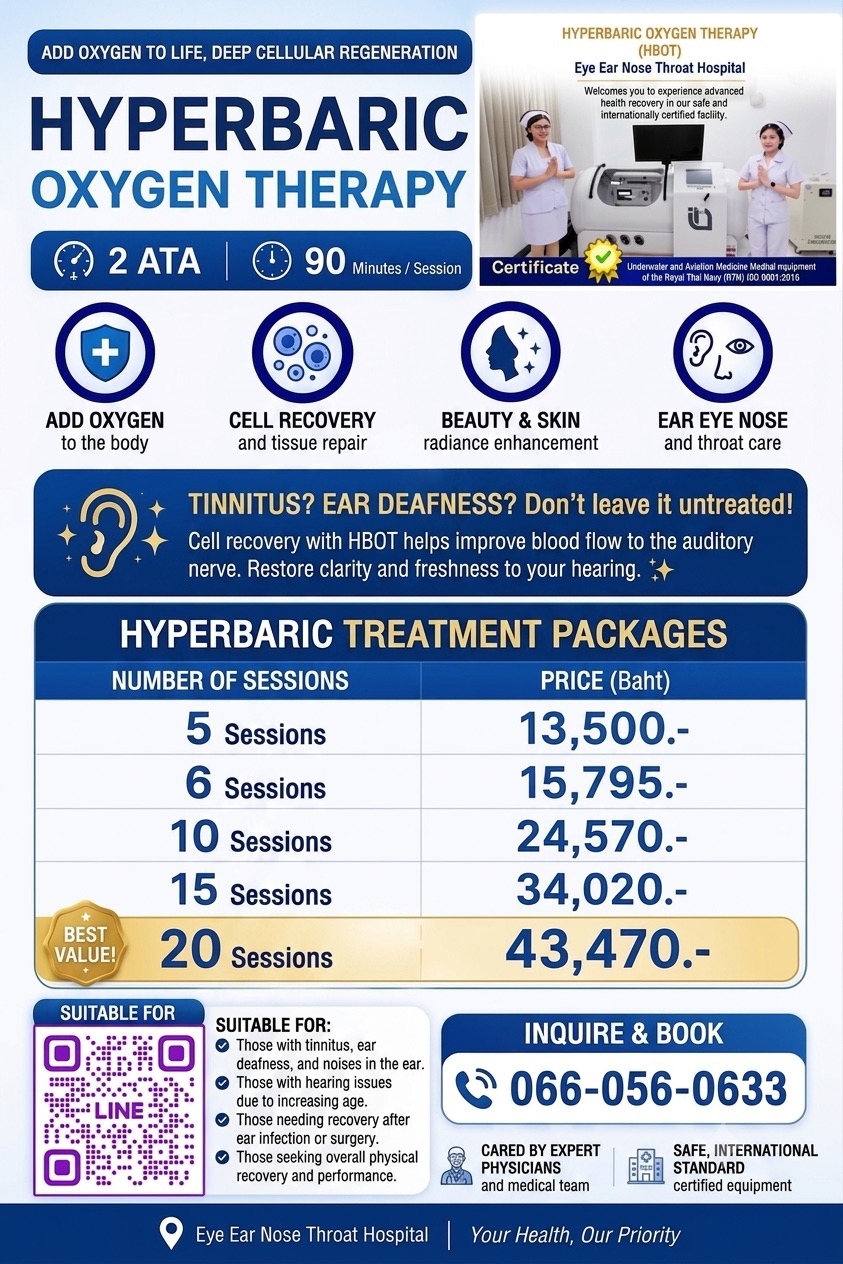
"Because hearing... can't wait"
"Because hearing... can't wait"
The sooner you start, the better the recovery
HBOT delivers oxygen to the inner ear
for effective cell recovery.

PROMOTION 2
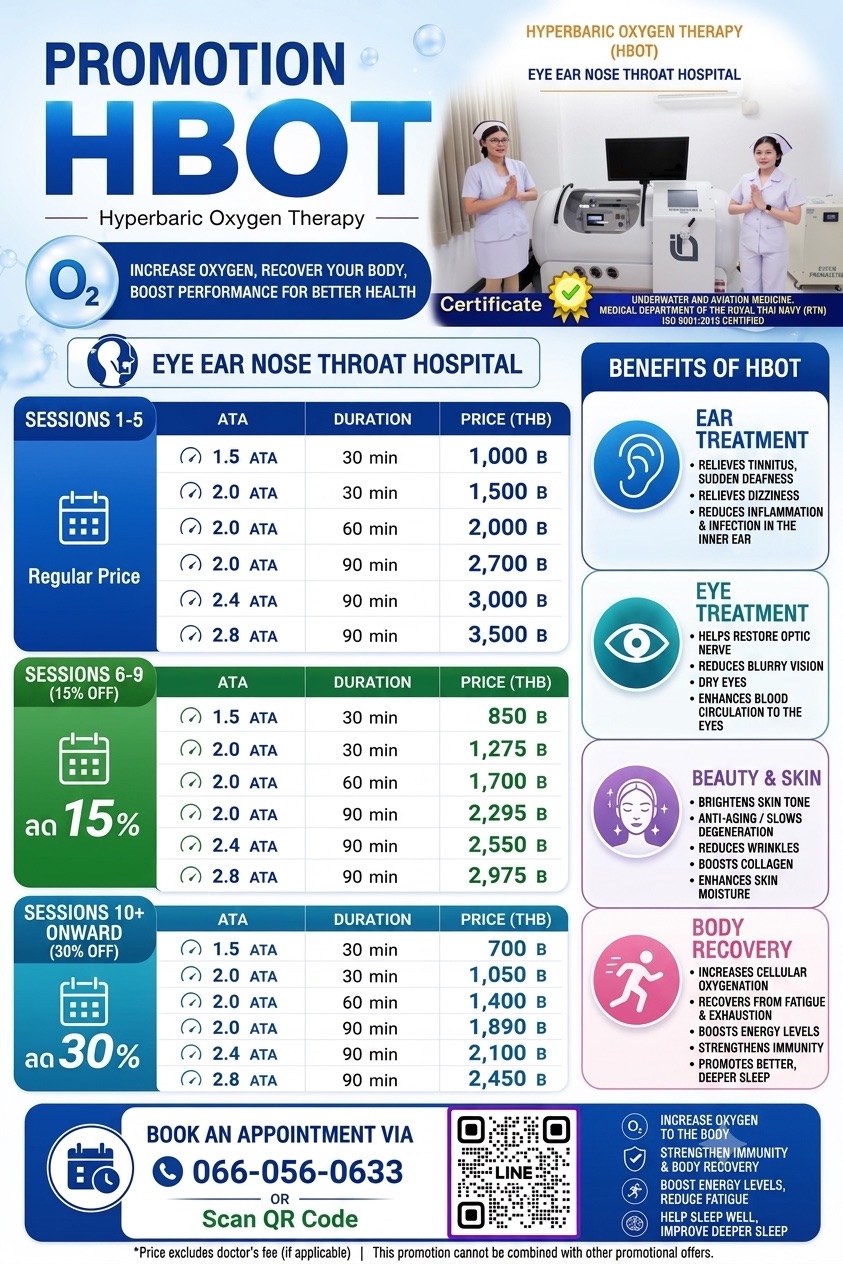
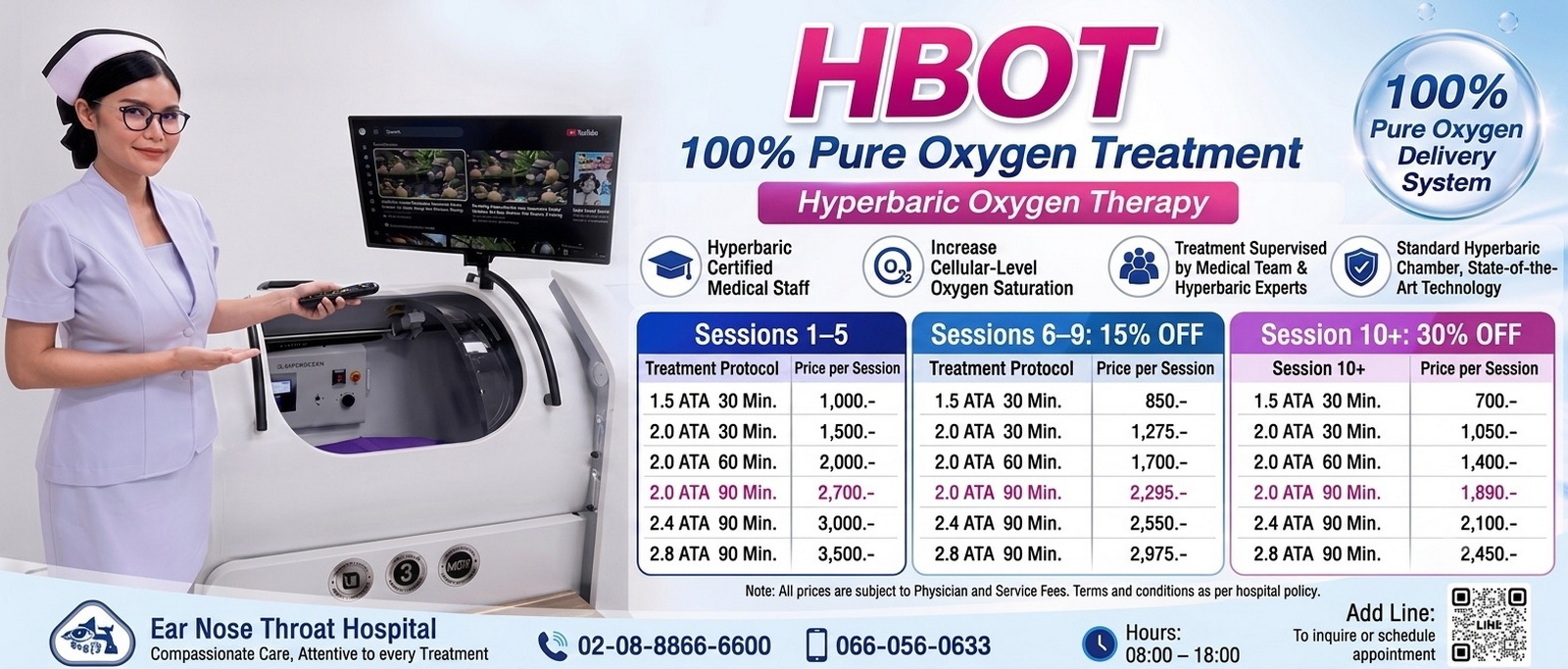
Boost Oxygen, Rejuvenate Your Body
Boost Oxygen, Rejuvenate Your Body
Enhance performance for better health